
MUSI GATEWAY
Tracing the River: A Life Giver
A city that grew along the Musi — this has been Hyderabad’s identity across the ages. Over time, the city has expanded and transformed.
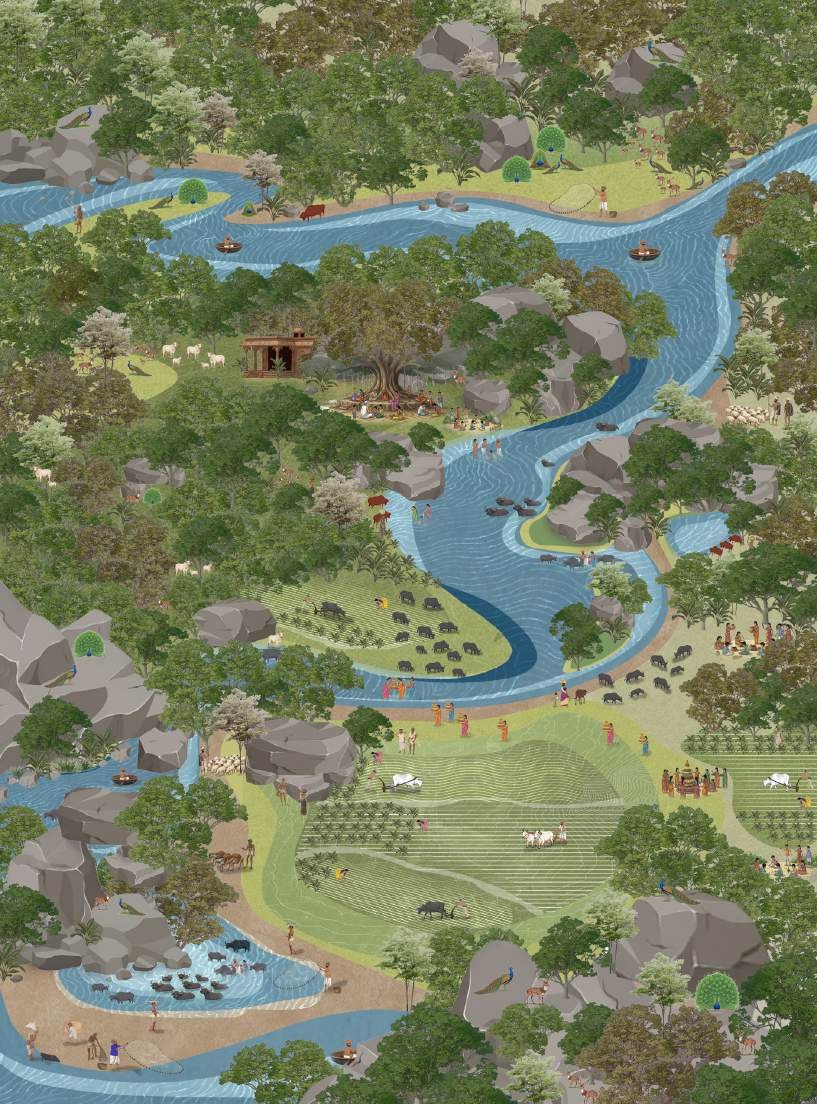
Like many metropolises, multiple roads now flank it, while the river flows quietly beneath layers of stone and steel. Ghats that once celebrated its edge stand vacant, and the Musi wonders where her children have gone.
Today, Hyderabad is encircled by concentric ring roads — corridors of movement where the city flashes past in seconds. Amid this landscape, the city envisions a gateway along the Outer Ring Road — an invitation for the passerby to pause, to celebrate the city rather than just pass through it.
And no celebration of Hyderabad is complete without commemorating the river and its course, both physical and metaphorical, as the city’s life-giving force. This is a moment where designers and architects come together to craft that memory.
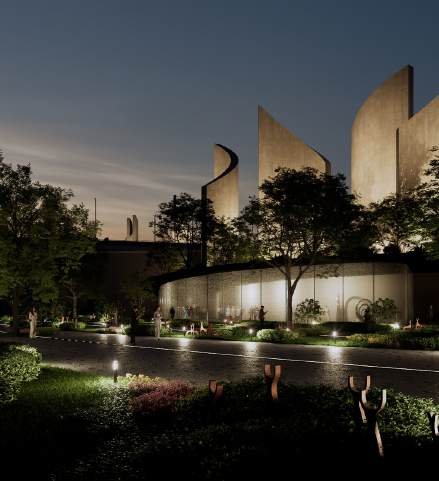
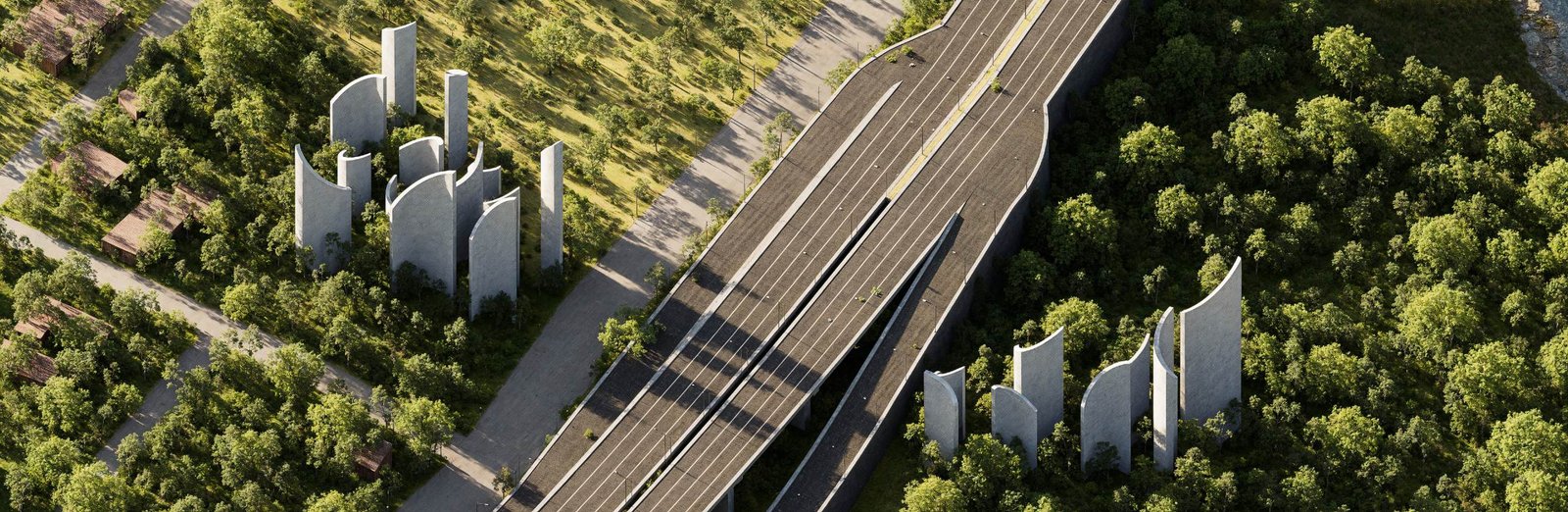
The proposal spans a parcel of land along the Outer Ring Road, tracing the course of the river and framing its direction. This act of tracing recalls the myth of Hyderabad’s founding — how shepherds were led by their flock to the river — but extends beyond legend.
It becomes a metaphor for how, even in our global pursuits, we yearn for the familiar act of coming home. The monument stands as a collective celebration of that homecoming.
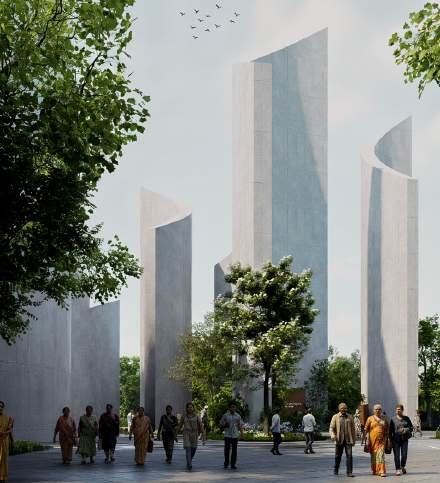
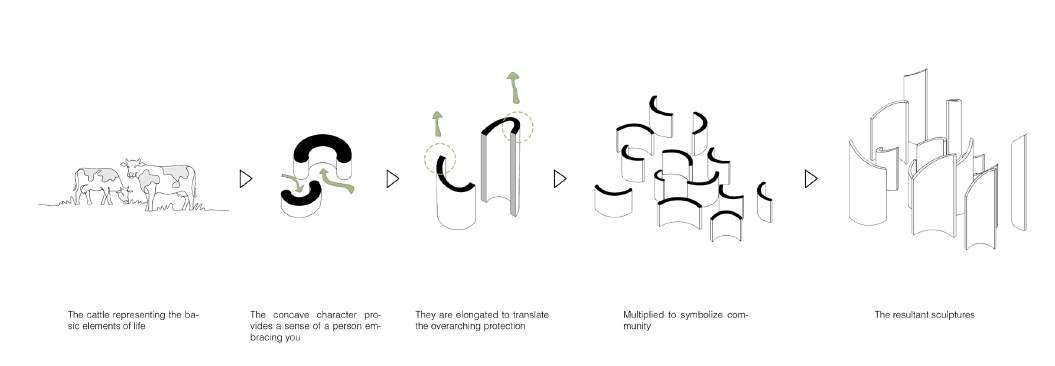
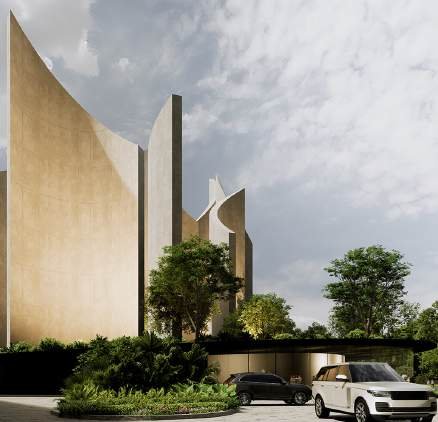
This movement translates into stone: concave, towering structures that abstract the form of the cattle and mark a symbolic gateway into the city. Initially spaced apart, these sculptures evoke the image of beings slowly gathering — introspective, unhurried, the first stirrings of community.
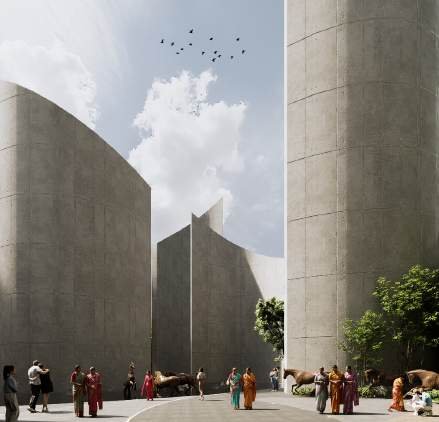
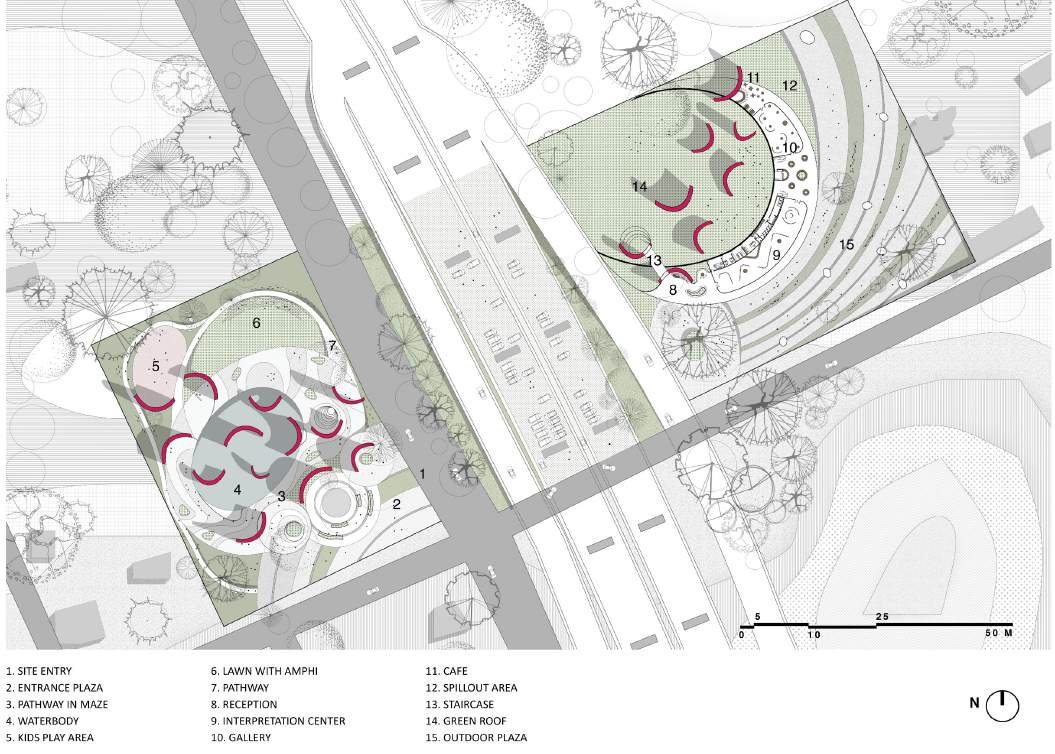
The space they shape is intentionally unprogrammed — a public ground for wandering, for pausing, for rediscovering oneself.
Across the street, the sculptures begin to densify, as if having glimpsed the river — drawn now to move together. Their behavior mirrors our own human desire to belong, to gather, to find an anchor.
Here, the proposal transforms into a more formal space — one that can host and stage events. At its heart lies The Museum of Musi, an ode to the river that has sustained an entire ecosystem.
Tucked beneath a subtly graded ramp, the museum offers an immersive experience; as visitors emerge, the ramp unfolds into an amphitheatre, extending the site’s public character.
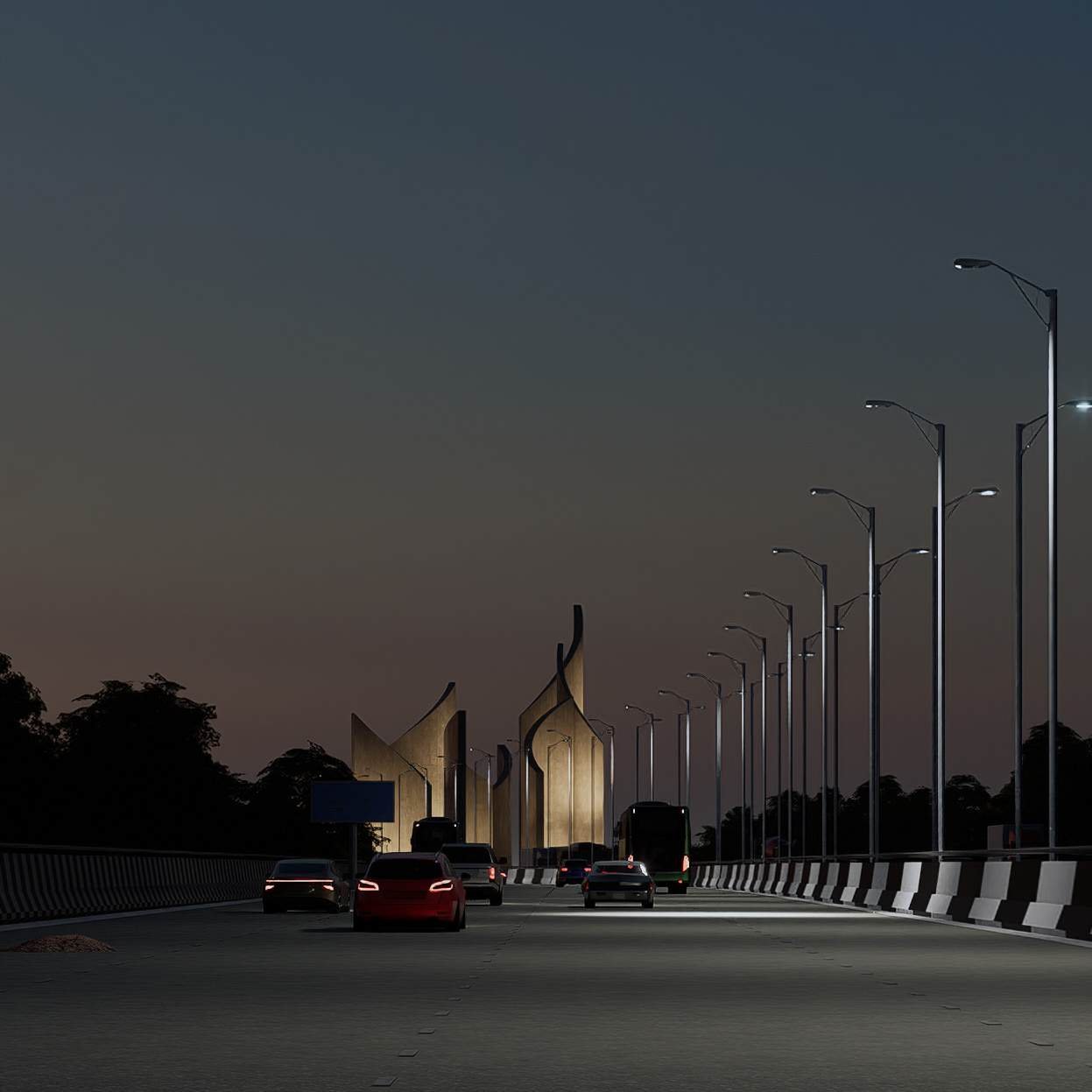
The proposal resonates at two scales. From the car, these towering forms offer a monumental entry into the city — minimal yet evocative, glimpsed in motion. On foot, the concave interiors envelop you, creating a quiet sense of shelter, almost childlike in comfort.
And as you drive past this junction on the Outer Ring Road, the city hums a new tune — a faint, familiar lullaby, now reborn. The song of a city remembering its river, and of its children finding their way back home.